
Three new people joined the CRM during the month of April, both to work with research groups and with the research support team.
The Centre de Recerca Matemàtica continues to grow with the recent addition of a postdoctoral researcher, a research technician, and a data steward. María da Fonseca is joining the Neuroscience research group as a postdoctoral fellow to work with Alexandre Hyafil on the Computational model for daily fluctuations in psychological states project. The project aims to predict possibly pathological changes in a person’s mood based on the decisions that are recorded daily on their mobile phone. María has a degree in physics and a doctorate from the Instituto Balseiro, in Argentina. Before joining the CRM, she was a postdoctoral researcher at Centro Atómico Bariloche, Universitat Pompeu Fabra, and Universidad de Buenos Aires. Her most recent position was as an associate professor at the Universidad Nacional de Río Negro.
This April we have also welcomed Laura Orrit, who joins the Mathematical & Computational Biology group to work with Josep Sardanyés on the project HENOCANDYN: HEterogeneity and NOise as engines of CANcer evolution: A multiscale DYNamical systems approach. The aim of this project is to further develop our research on the role of heterogeneity in cancer, identify routes to and mechanisms of resistance to treatment, and, finally, evaluate the rational design of combinatorial therapies involving existing drugs and prescribe new therapeutic strategies to overcome the effects of heterogeneity. Laura completed her Bachelor’s in Biomedical Engineering at Universitat Pompeu Fabra in 2021. During the last year of the degree, she performed her Bachelor Thesis, where I was involved in a modeling project focused on the design and development of a computational model to study the dynamics of a heterogeneous population of cancer cells with evolving immunogenicity, in interaction with regulatory and practical T cells.
Finally, the CRM Research Support Team has hired Ariadna Gutiérrez as data steward. Ariadna studied Physics at Universitat de Barcelona, specializing in Fundamental Physics, and she continued her studies with an MSc. in Astrophysics, Particle Physics, and Cosmology at Universitat de Barcelona. She has given dissemination sessions related to Astronomy, which included the observation of celestial bodies, and other dissemination sessions related to Women in Science, aimed to encourage children and teenagers to pursue a degree in Science. Ariadna joins the CRM research support team as a Data Stewart thanks to the INVESTIGO program. As a data steward, her role will be to design and monitor data management plans for research projects, collaborate with the researchers in the collection and maintenance of data, and propose solutions to transform them into FAIR data. She will also contribute to the CRM strategy in open science and to the maintenance and updating of the institutional repository.
We want to welcome them to the CRM community and wish them a very fruitful time with us!
Subscribe for more CRM News


CRM Comm Team
Anna Drou | Pau Varela
CRMComm@crm.cat
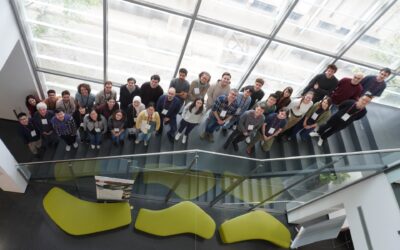
Jagged walls and unknown edges: a workshop on free boundary problems
From 2 to 6 November, the Workshop on Free Boundary Problems brought together more than fifty registered participants from institutions in eleven countries at the CRM. Over five days they heard 21 talks on elliptic and parabolic free boundaries and on geometric measure theory and harmonic analysis in rough domains, with speakers including Guy David, Svitlana Mayboroda, Susanna Terracini and Robin Neumayer. The workshop was the second intensive week of the Intensive Research Programme on Analysis of Free Boundary Problems, which continues at the CRM until 4 December.
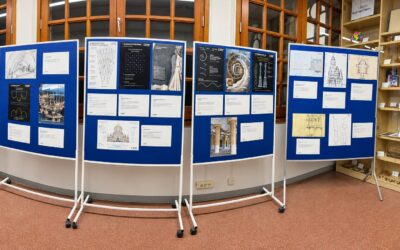
The CRM exhibition ‘Les matemàtiques de Gaudí’ moves to the University of Barcelona
After its October run at the UAB, the exhibition Les matemàtiques de Gaudí, produced by the CRM, can be seen at the University of Barcelona’s CRAI Biblioteca de Matemàtiques i Informàtica from 2 to 30 November 2026.
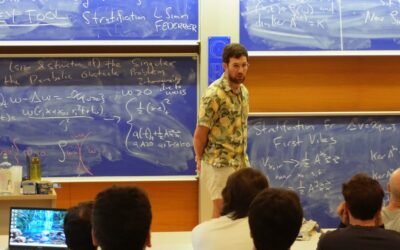
Advanced Course on Free Boundary Problems Opens the Intensive Weeks of the IRP
From 26 to 30 October, around forty researchers attended the Advanced Course on Free Boundary Problems at the CRM, three seven-hour mini-courses given by Bozhidar Velichkov (Università di Pisa), Max Engelstein (University of Minnesota) and Zihui Zhao (Johns Hopkins University). The course was the first of the two intensive weeks of the Intensive Research Programme on Analysis of Free Boundary Problems, which runs until 4 December.
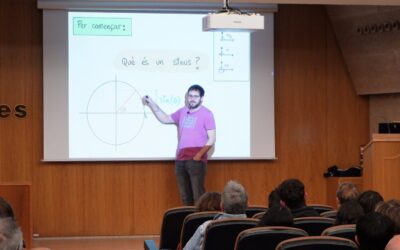
El CRM rep els estudiants de la prova de nivell de Bojos per les Matemàtiques 2027
Els aspirants a Bojos per les Matemàtiques 2027 van visitar el Centre de Recerca Matemàtica (CRM) dissabte 24 d’octubre, després de fer la prova de nivell a la Facultat de Ciències i Biociències de la UAB. En acabat, Tomás Sanz (UB-CRM) els va explicar què té a veure l’escalfament d’una barra de ferro amb els àudios de WhatsApp.
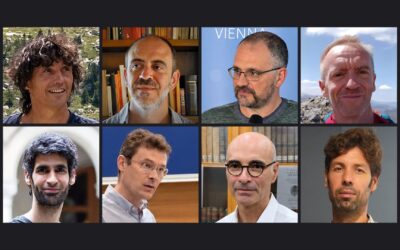
Eight CRM Researchers in the 2026 Stanford-Elsevier List of Highly Cited Scientists
The Centre de Recerca Matemàtica (CRM) has eight researchers in the 2026 update of the Stanford-Elsevier ranking of highly cited scientists, which John P. A. Ioannidis (Stanford University) and Jeroen Baas (Elsevier) compile from Scopus data. Xavier Cabré, Álvaro Corral, Tim Myers, Xavier Ros-Oton, Sergey Tikhonov and Xavier Tolsa appear both in the career-long ranking and in the one for 2025, and Diego Vidaurre and Simeon Ball in the 2025 ranking.
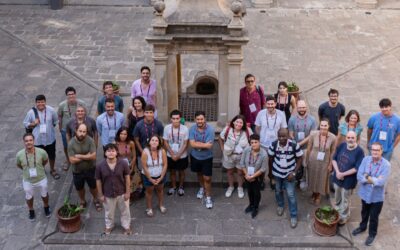
Fish schools and growing tissues: a workshop on how collective behaviour emerges
The Centre de Recerca Matemàtica (CRM) organised the Barcelona Workshop on Kinetic and Macroscopic Models in Biology with Friends II, held from 7 to 10 September at the Institut d’Estudis Catalans. More than thirty researchers discussed how order at the scale of tissues and animal groups arises from local interactions between individuals, in a programme that included talks by CRM researchers Daria Stepanova and Juan Arellano-Tintó. Two of the speakers, James Sharpe (EMBL Barcelona) and Chiara Villa (CNRS, Université Paris Cité), talked to the CRM about their research.
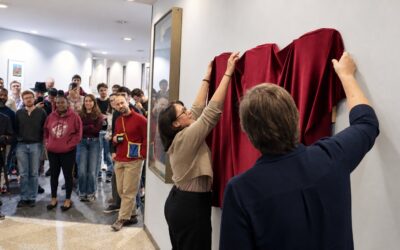
The CRM opens the academic year and unveils its Directors’ Gallery
A review of the year, the Communication Plan 2026–2030 and three research talks filled the morning of 19 October.The unveiling of the Directors’ Gallery.CRM CommPau VarelaCRMComm@crm.catGet the latest CRM news and activities in your inbox.Recent...
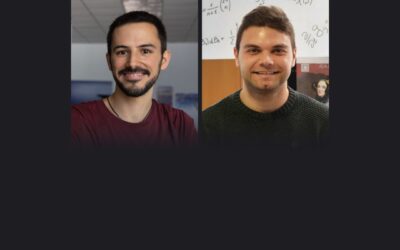
The CRM Mentoring Programme, as Told by One of Its Pairs
PhD student Joaquim Duran and mathematician Robert Cardona, one of the pairs in the CRM Mentoring ProgrammeJoaquim Duran (left) and Robert Cardona.CRM CommPau VarelaCRMComm@crm.catGet the latest CRM news and activities in your inbox.Recent...
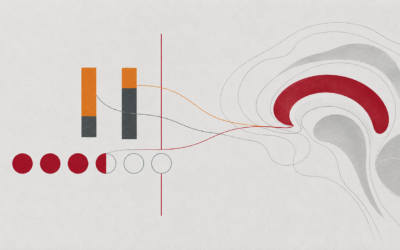
When the reward comes within reach, the brain changes what it compares
As the tokens piled up, choices got faster and more accurate at the same time. The yardstick for judging each offer had moved.CRM CommPau VarelaCRMComm@crm.catGet the latest CRM news and activities in your inbox.Recent newsletters →Two subjects...

Almost every automaton can be reset with a short word
Guillaume Chapuy (Université Paris Cité, CNRS) and Guillem Perarnau (UPC, CRM) have shown that a random finite automaton with n states can, with high probability, be reset by a word of length of order √n log n. The result, published in ACM Transactions on Algorithms, pins the exponent at 1/2, the lower end of a decade of numerical estimates, and addresses the random version of the synchronization problem behind a conjecture Ján Černý posed in 1964 and which still remains open.
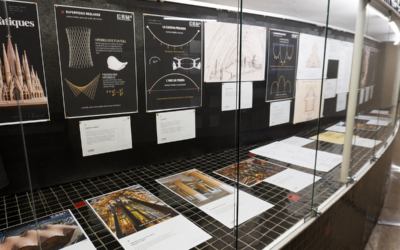
Exposició ‘Les matemàtiques de Gaudí’