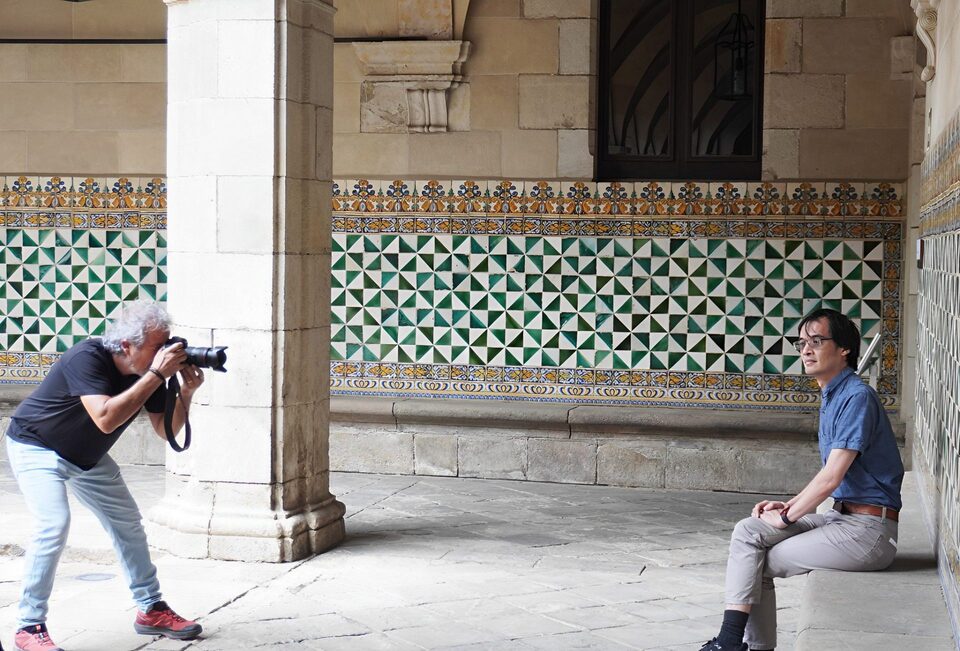
Terence Tao’s visit to Barcelona for the Fluid Dynamics, Geometry, and Computer Science in Interaction workshop, held from September 16-20, 2024, was a significant event for the mathematical community. Tao delivered the CRM Annual Colloquium on Machine Assisted Proofs at the Institut d’Estudis Catalans, discussing the evolving role of AI in mathematics. The event attracted a diverse audience, including many young students, and served as a major opportunity for collaboration and learning, with prominent speakers also contributing to the workshop.
Bellaterra, September 27, 2024 – Terence Tao, one of the most celebrated mathematicians working today, visited Barcelona to participate in the Fluid Dynamics, Geometry, and Computer Science in Interaction workshop from September 16 to 20, 2024. Organized by Ángel González Prieto (Universidad Complutense de Madrid), Eva Miranda (Universitat Politècnica de Catalunya-CRM), and Daniel Peralta-Salas (Instituto de Ciencias Matemáticas-CSIC), the workshop gathered leading experts to explore the intersections of these fields.
Tao, often described as the “Mozart” or the “Leonardo da Vinci” of mathematics, has contributed to fields ranging from number theory to harmonic analysis. His passion for numbers was evident from a young age. As he shared in an interview with Diari Ara, by the age of two, Tao had already taught older children how to count and often requested mathematical problems to occupy himself.
His IQ, measured at 230 when he was just eight years old, remains among the highest ever recorded, although Tao humbly downplays its significance. As he explained in the interview, it is hard work and curiosity, not IQ, that drives mathematical success. Some of Tao’s mathematical research has had far-reaching practical applications, including advances in medical imaging technologies like MRI scans. By connecting mathematical puzzles with real-world problems, Tao has helped reduce MRI scan times, making the procedure more efficient and less distressing for patients.
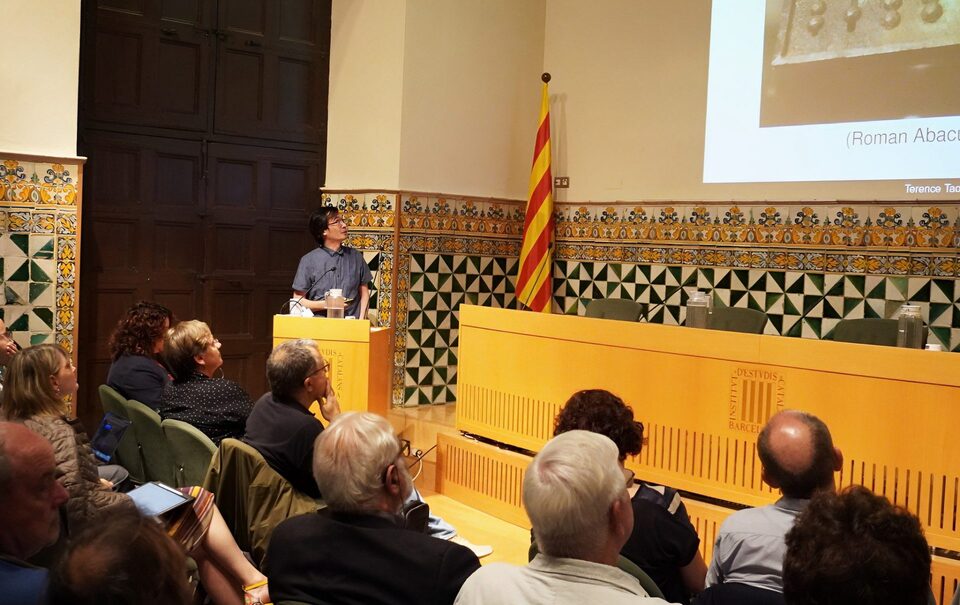
One of the highlights of Tao’s visit was delivering the CRM Annual Colloquium at the Institut d’Estudis Catalans on September 18. Titled Machine Assisted Proofs, his lecture explored how computers, artificial intelligence, and machine learning are increasingly becoming integral to mathematical discovery. He highlighted how these tools have evolved from being mere computational aids to now generating conjectures, performing proofs, and pushing the boundaries of what human mathematicians can achieve. Tao further speculated on the future of these collaborations, predicting a deeper integration of human creativity with machine precision.
The public colloquium, held in the packed Sala Prat de la Riba, was a major event for the mathematical community in Barcelona. It drew in a diverse audience, including many eager undergraduate students, providing them with a rare chance to engage directly with Terence Tao, one of the most influential mathematicians of our time. This gathering fostered lively discussions and served as a valuable networking opportunity, reinforcing Barcelona’s role as a hub for mathematical innovation and collaboration.
The workshop itself featured other prominent speakers, including Pierre Berger (IMJ-PRG, CNRS, Sorbonne Université), Pilar Bayer (Universitat de Barcelona), and Robert Ghrist (University of Pennsylvania). The week-long meeting facilitated deep interdisciplinary discussions, particularly on the intersections between fluid dynamics, geometry, and computational mathematics.
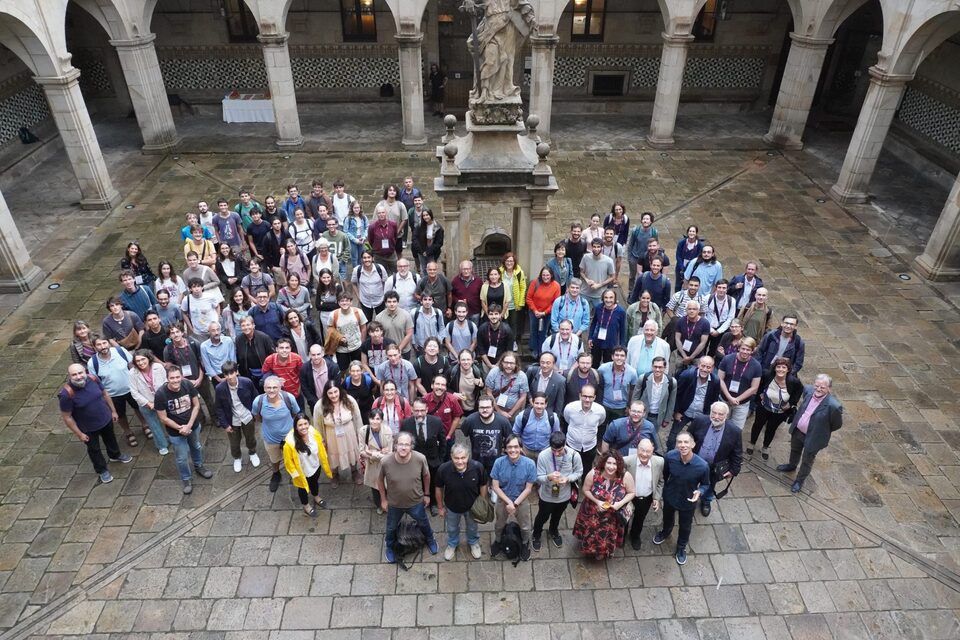
Tao’s visit to Barcelona not only provided a platform for sharing groundbreaking ideas but also inspired a new generation of mathematicians to explore the profound potential of collaboration between human and machine intelligence in solving some of the world’s most complex problems.
Subscribe for more CRM News
|
|
CRM CommPau Varela
|
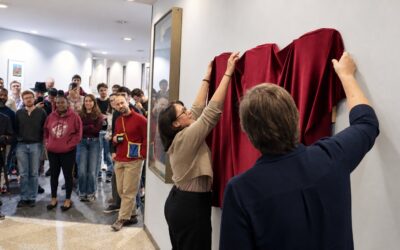
The CRM opens the academic year and unveils its Directors’ Gallery
A review of the year, the Communication Plan 2026–2030 and three research talks filled the morning of 19 October.The unveiling of the Directors’ Gallery.CRM CommPau VarelaCRMComm@crm.catGet the latest CRM news and activities in your inbox.Recent...
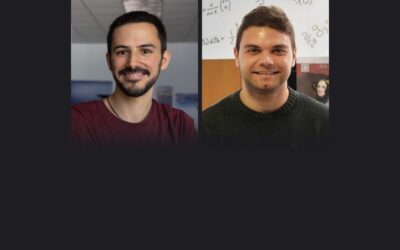
The CRM Mentoring Programme, as Told by One of Its Pairs
PhD student Joaquim Duran and mathematician Robert Cardona, one of the pairs in the CRM Mentoring ProgrammeJoaquim Duran (left) and Robert Cardona.CRM CommPau VarelaCRMComm@crm.catGet the latest CRM news and activities in your inbox.Recent...
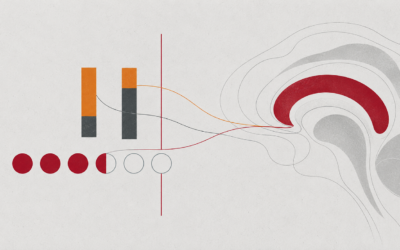
When the reward comes within reach, the brain changes what it compares
As the tokens piled up, choices got faster and more accurate at the same time. The yardstick for judging each offer had moved.CRM CommPau VarelaCRMComm@crm.catGet the latest CRM news and activities in your inbox.Recent newsletters →Two subjects...

Almost every automaton can be reset with a short word
Guillaume Chapuy (Université Paris Cité, CNRS) and Guillem Perarnau (UPC, CRM) have shown that a random finite automaton with n states can, with high probability, be reset by a word of length of order √n log n. The result, published in ACM Transactions on Algorithms, pins the exponent at 1/2, the lower end of a decade of numerical estimates, and addresses the random version of the synchronization problem behind a conjecture Ján Černý posed in 1964 and which still remains open.
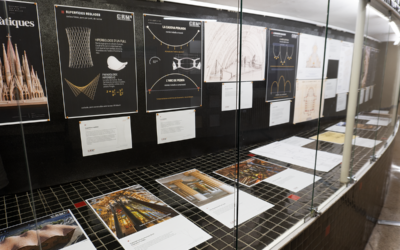
Exposició ‘Les matemàtiques de Gaudí’
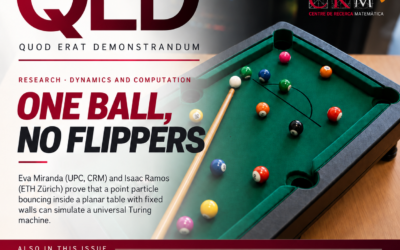
CRM quod erat demonstrandum | 48
ADA: Decoding Brain Signals Misaligned in Time
The study addresses a key limitation of current brain decoding techniques: the difficulty of interpreting internal mental processes whose temporal dynamics vary from trial to trial.Decoding what is happening in a person’s mind from their brain activity is one of the...
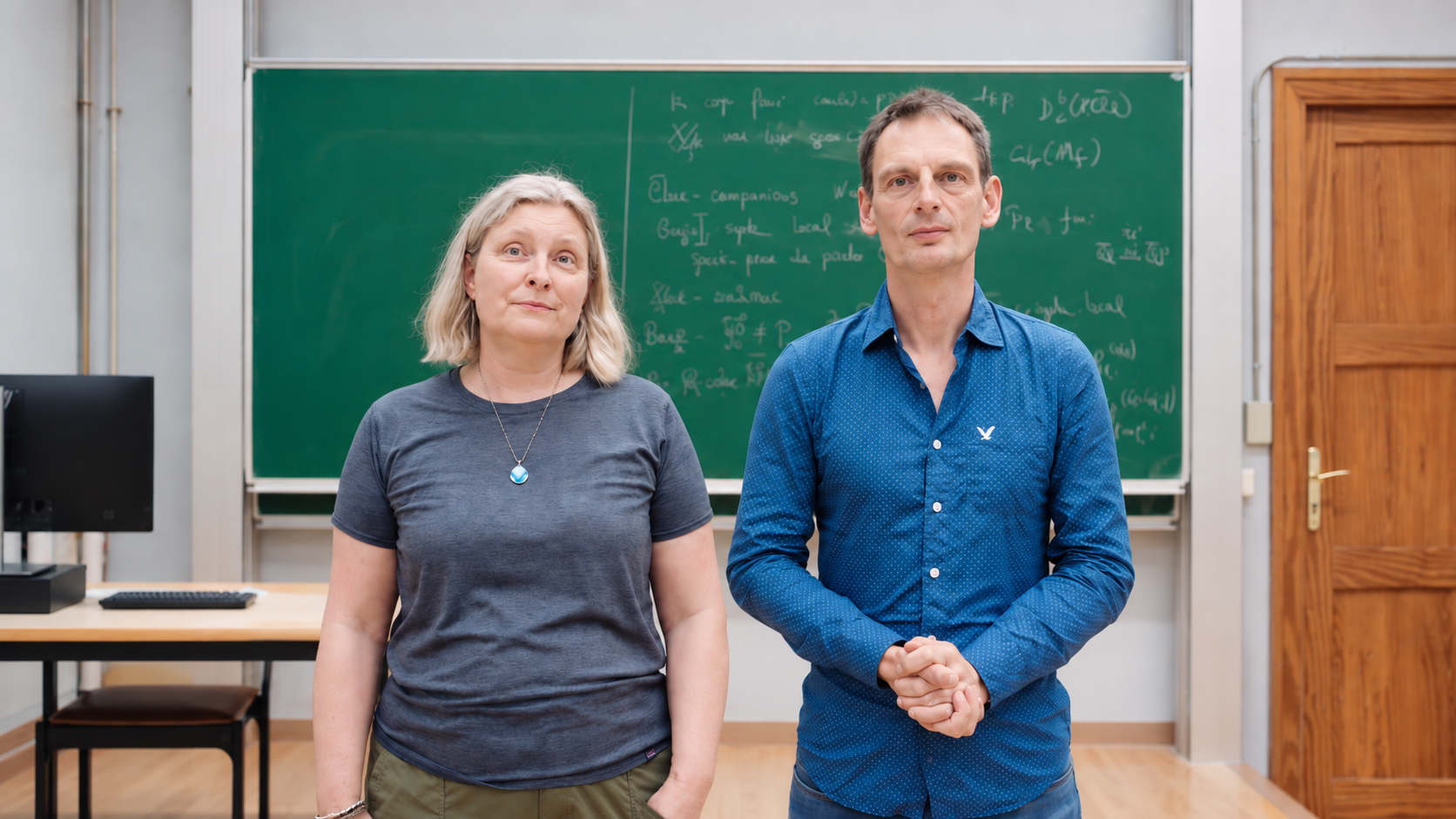
Rare curves, many points: Christophe Ritzenthaler and Rachel Pries on their research and the work around it
Christophe Ritzenthaler (Université de Rennes) and Rachel Pries (Colorado State University) both work on curves over finite fields: he hunts curves with as many points as possible, she hunts curves that almost never occur. In conversation with the CRM during their...
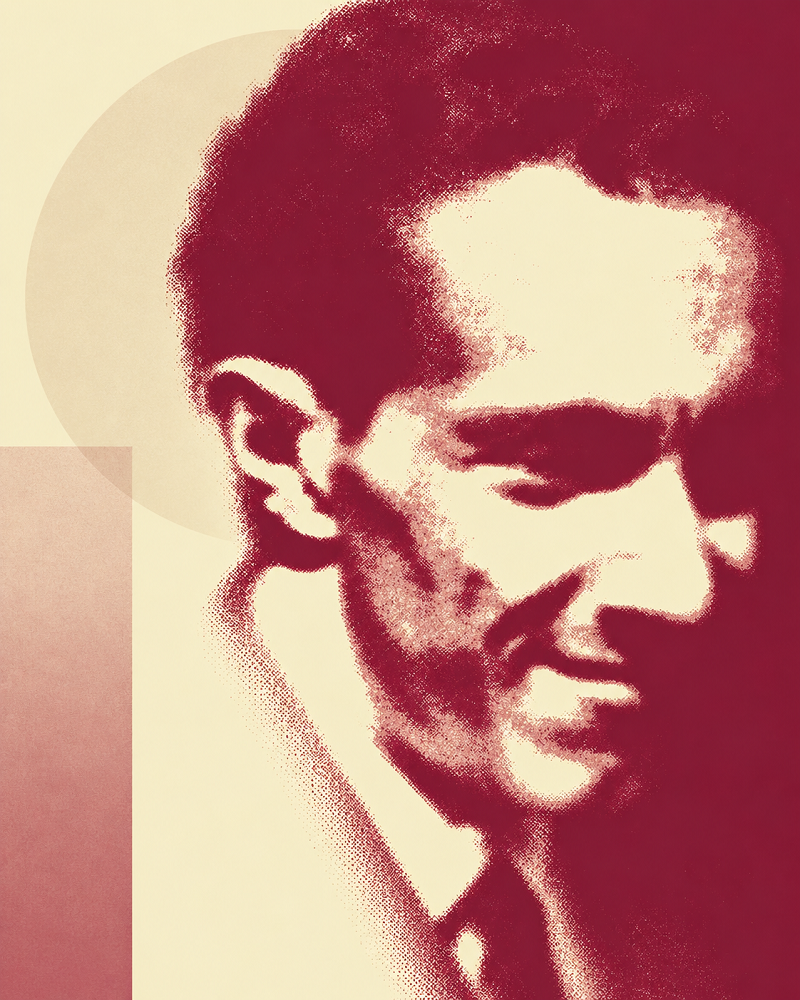
Call open for the 2027 Ferran Sunyer i Balaguer Prize
The Ferran Sunyer i Balaguer Foundation is accepting submissions for its 2027 prize, which awards 15,000 euros and publication in Birkhäuser's Progress in Mathematics series to an expository monograph on an active area of mathematical research. The deadline is 27...
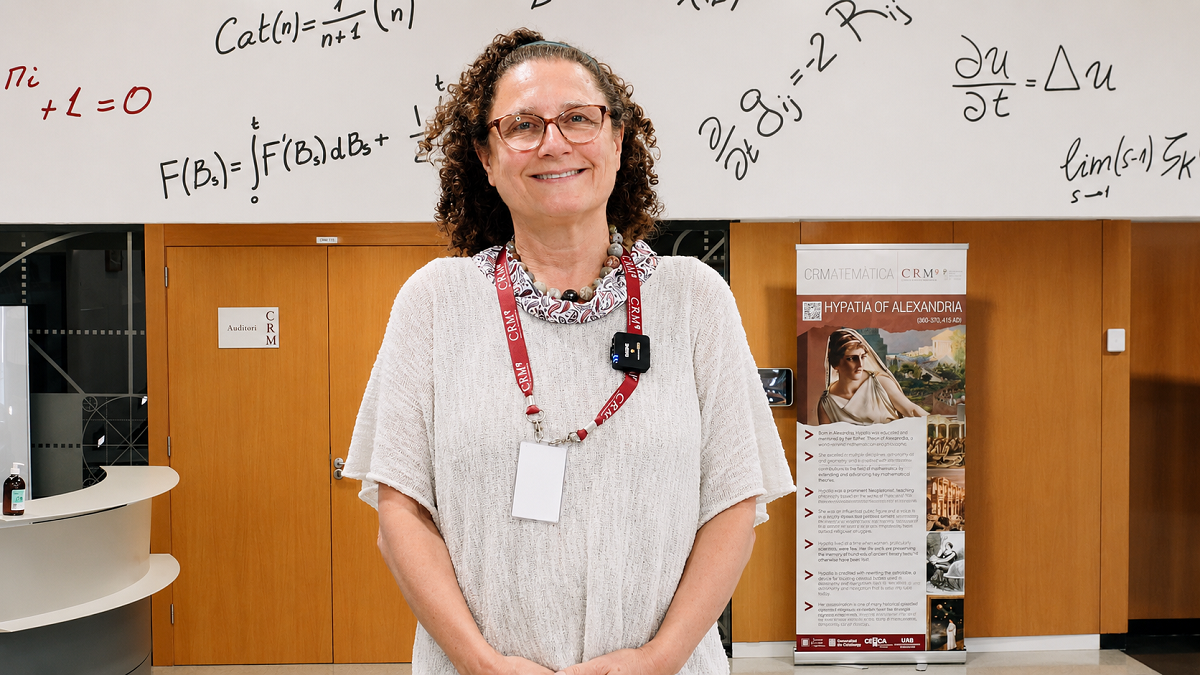
Susanna Terracini delivers the CRM Colloquium 2026
Susanna Terracini (Università di Torino) delivered the CRM Colloquium 2026 on 14 July, presenting a rigidity result for Kepler billiards obtained with Stefano Baranzini, Vivina Barutello and Irene De Blasi. She was at the centre as a member of the CRM Scientific...
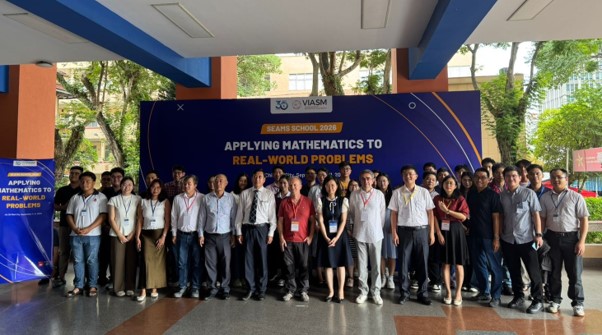
Ho Chi Minh City hosts the SEAMS School on applying mathematics to real-world problems
Students from across the region took courses and worked on group projects at a school co-organised by CRM researcher Tim Myers.CRM CommPau VarelaCRMComm@crm.catGet the latest CRM news and activities in your inbox.Recent newsletters →Between 4 and...

A single ball on a fixed table can compute: Eva Miranda and Isaac Ramos prove that two-dimensional billiards are Turing complete
Eva Miranda (UPC, CRM) and Isaac Ramos (ETH Zürich) show that a point particle bouncing inside a planar table with fixed walls can simulate a universal Turing machine, settling a question Cristopher Moore left open in 1990. The result grew out of a master’s project...